Your thyroid labs are "normal." So why are you still tired?
A basic thyroid screen checks one number. Here's what that number tells you, what it doesn't, and what a full thyroid panel adds.

You mentioned the fatigue. Maybe the weight that won't move, the brain fog, the thinning hair, or feeling cold when no one else is. Your provider ran bloodwork, and a few days later you heard the words: everything looks normal.
That can be a relief. It can also be confusing, because you still don't feel like yourself. Many patients come to us at exactly this point, so here's what a "normal" thyroid result usually means and what else is worth looking at.
What a standard thyroid screen measures
Most thyroid screens check TSH, or thyroid-stimulating hormone. TSH is a signal from the pituitary gland in your brain that tells your thyroid how hard to work. When thyroid hormone is low, TSH usually rises. When it's high, TSH usually falls.
TSH is a reliable first test, and current clinical guidelines recommend it as the starting point for thyroid screening.1 But it's one signal. It doesn't directly show:
- Free T4, the storage form of thyroid hormone
- Free T3, the active form your cells use for energy and metabolism
- Reverse T3, an inactive form that can rise with stress or illness
- Thyroid antibodies (TPO and thyroglobulin), which point to autoimmune thyroid disease
"In range" covers a lot of ground
Lab reference ranges are built to flag disease, and the range for TSH is wide, roughly 0.45 to 4.5 mIU/L on most lab reports.2 In functional medicine, we look for an optimal range, not just a normal one. For TSH, that's about 1.0 to 2.0 mIU/L.6
The narrower range has support in the research too. More than 95% of healthy people without thyroid disease have a TSH below 2.5,3,7 and in a large study of adults, TSH levels in the upper part of the normal range were linked to higher heart disease risk in women.8
What that means for you: a TSH of 3.5 or 4.0 is "normal" on a lab report, but it sits well above the optimal range. Alongside real symptoms, it's worth a closer look.
"Normal" means your result falls inside a range. It doesn't always mean your thyroid is working well for you.
Autoimmune thyroid changes can start early
Hashimoto's thyroiditis is the most common cause of hypothyroidism in the United States.1 It happens when the immune system makes antibodies against the thyroid and slowly affects how much hormone it can make.
Antibodies can show up years before TSH moves out of range.4,5 In a 20-year community study, women who had both thyroid antibodies and a mildly raised TSH were much more likely to develop hypothyroidism over time.4 Testing antibodies doesn't change your diagnosis on its own, but it tells you and your provider what to watch.
Symptoms are easier to read together
Fatigue, weight changes, low mood, brain fog, and hair thinning each have many possible causes, including sleep, iron levels, stress, and other hormones. Looked at one at a time, they're easy to explain away. Looked at together, alongside a full set of labs, a pattern is sometimes easier to see.
Thyroid isn't always the answer. Sometimes the full panel is reassuring, and that's useful too, because it points the search somewhere else.
How we look at thyroid health
Across all of our care at Balanced Health, we focus on optimal ranges: where your body feels and functions its best, not just where it avoids a diagnosis. A thyroid workup includes TSH, Free T4, Free T3, Reverse T3, and both thyroid antibodies, along with iron stores and the nutrients thyroid function depends on. We read those results next to your symptoms and history, then build a plan and recheck as your body responds.
If you're already on thyroid medication and still don't feel right, that's one of the most common reasons patients come to see us.
What you can do next
- Ask for a copy of your most recent labs and check which thyroid markers were actually tested.
- Write down your symptoms and when they started, including changes around pregnancy, perimenopause, or major stress.
- If only TSH was checked and your symptoms haven’t changed, ask about a full thyroid panel.
You can learn how we approach thyroid care, or book a free discovery call to talk it through. We see patients in person in Hammonton and virtually anywhere in New Jersey.
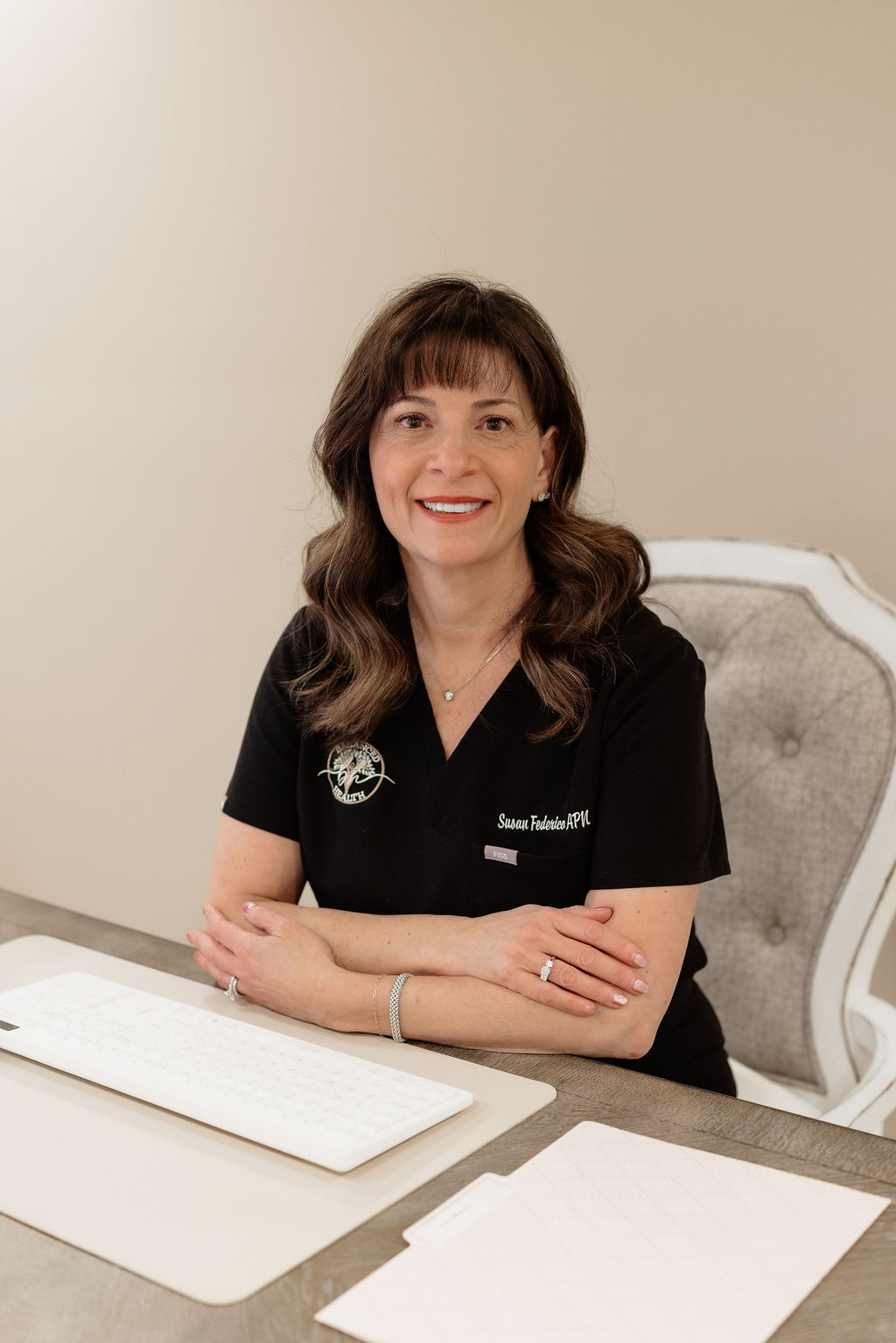
Founder of Balanced Health and a Georgetown University–trained women's health nurse practitioner with 25+ years in medicine and advanced training in functional medicine.
Meet our teamSources
- Garber JR, Cobin RH, Gharib H, et al. Clinical practice guidelines for hypothyroidism in adults (AACE and ATA). Thyroid. 2012;22(12):1200–1235.
- Hollowell JG, Staehling NW, Flanders WD, et al. Serum TSH, T4, and thyroid antibodies in the United States population (1988 to 1994): NHANES III. J Clin Endocrinol Metab. 2002;87(2):489–499.
- Wartofsky L, Dickey RA. The evidence for a narrower thyrotropin reference range is compelling. J Clin Endocrinol Metab. 2005;90(9):5483–5488.
- Vanderpump MP, Tunbridge WM, French JM, et al. The incidence of thyroid disorders in the community: a twenty-year follow-up of the Whickham Survey. Clin Endocrinol. 1995;43(1):55–68.
- Caturegli P, De Remigis A, Rose NR. Hashimoto thyroiditis: clinical and diagnostic criteria. Autoimmun Rev. 2014;13(4–5):391–397.
- EVEXIAS Health Solutions. Practitioner clinical training in hormone and thyroid optimization.
- Baloch Z, Carayon P, Conte-Devolx B, et al. Laboratory medicine practice guidelines: laboratory support for the diagnosis and monitoring of thyroid disease (NACB). Thyroid. 2003;13(1):3–126.
- Åsvold BO, Bjøro T, Nilsen TI, Vatten LJ. Thyrotropin levels and risk of fatal coronary heart disease: the HUNT study. Arch Intern Med. 2008;168(8):855–860.
This article is for education only and isn't medical advice. Talk with your provider before starting or changing any treatment.